
Thanksgiving. Black Friday. Small business Saturday. Cyber Monday. Giving Tuesday. Wider society has its own calendar, something like a religious calendar. For Christians, the Liturgical Year is important. It’s where we meet the Lord. If you glance at the calendar in the sacristy indicating the Mass to be offered each day, it begins this evening, the vigil of the First Sunday of Advent, with the words, “THE BEGINNING OF THE YEAR OF GRACE 2026.” It’s a great description of how time is since Christ came among us. Since the Incarnation, every year is a “Year of our Lord” (Anno Domini). Time is a time of grace. God meets us there and wants to give us His gifts. He comes to us in our time, shaping us for His eternity.
In Advent we begin a new Year of Grace. Over this liturgical year, we follow the mysteries of the Lord Jesus, His birth, life, death, and resurrection. His mysteries become our mysteries, making sense of our lives and transforming us. Every year we make this journey with Christ, longing for him, awaiting him, like Israel of old.
In today’s gospel, Jesus tells us: “be prepared, for at an hour you do not expect, the Son of Man will come” (Matt 24:44). Each year, beginning with Advent, the Church’s Liturgy prepares us for His coming. The liturgical year forms us. Every year we try to grow closer to Him. Am I closer to Jesus than I was last Advent? Will I try to be closer to Him this Christmas? Do I desire Him? —for “the Son of Man will come.”
One Advent soon leads to another, one Christmas to another, one year to another. We know that the One we await is coming, that He is our heart’s desire, and that our joy comes only from His presence. In Advent, we rejoice because the Lord is near. Indeed, joy is the presence of God. Saint John of the Cross reminds us, “Joy is not the absence of suffering but the presence of God.” And joy, G.K. Chesterton adds, “is the gigantic secret of the Christian.”
Perhaps this restrained and expectant joy most characterizes the Advent season. The waiting of Advent is a snapshot of Christian life, a life of attentiveness to the Lord who comes. The spiritual life is a state of attention (Eric Varden) because—and we often forget this—Jesus is coming to us all the time if only we would notice. Instead of living in the present and in His presence, we are often absent from our own lives, dwelling on the past or the future, on what has been or should be, on regrets and dreams. Yet, “He is with me now, quietly, unobtrusively, asking me to receive Him and recognize Him” and, most of all, to say “yes” to Him (Ruth Burrows).
Advent teaches us that, if I let Him, God comes and gives Himself to me in each “now.” Time is God’s messenger (St. Peter Faber), and God has placed us in time where He meets us and forms us. Advent is an important annual reminder that right now, in our lives, Christ comes. He comes, not yet in glory as on the last day, but always He is coming to us, offering us His love—and seeking ours.
Such spiritual receptivity is not something passive. It involves cooperation. It involves a responsiveness like that of the Blessed Virgin Mary who engaged most deeply in the mystery of Christ and who is our Mother and Advocate of Grace. Mary is “the icon in which Christ is venerated” and “the Virgin Mother who presents her Son, Jesus Christ, to us” (Mater Populi Fidelis, 54, 11). She teaches us the attentive, inner gaze of Advent, enabling us to live hopefully in joyful expectation of the Divine Messiah.
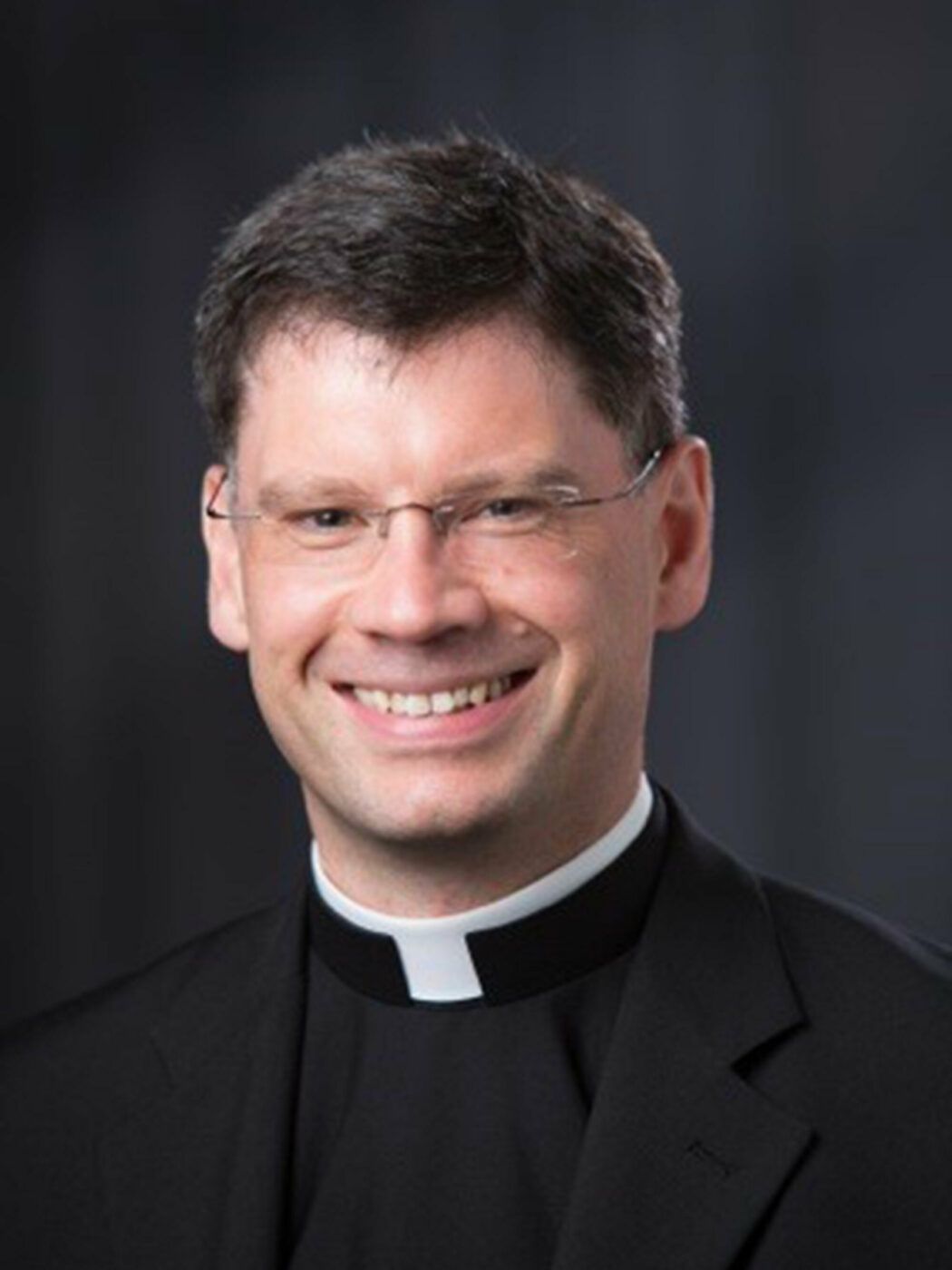
Rev. Joseph Briody
National University of Ireland, Maynooth, B.A.
Pontifical University, Maynooth, B.Ph.; B.D.; S.T.L.
Pontifical Biblical Institute, Rome, L.S.S.
Boston College School of Theology and Ministry, S.T.D., 2020
Profile See all posts© 2026 All Rights Reserved
Site by 