The Scriptures this Sunday unfold like a quiet but decisive call story—one that moves from God’s eternal intention to a concrete mission entrusted to fragile humans. For those in formation at Saint John’s Seminary, these readings invite us to listen again to the mystery of our own vocation: called before we act, named before we achieve, sent not for ourselves but for the life of the world.
In Isaiah, the servant discovers that his call precedes his effort: “The Lord said to me: You are my servant… I formed you from the womb” (Is 49:3, 5). Vocation is revealed here not as self-invention, but as divine initiative. Before the servant speaks or labors, he is already known and claimed. This is both consoling and unsettling. Consoling, because our worth does not depend on visible success; unsettling, because God’s call stretches far beyond our own plans. The Lord tells the servant that it is “too little” to be called only for one people—he is sent as “a light to the nations” (Is 49:6). True vocation always widens the heart. God’s call is never small, even when it begins in hiddenness.
Psalm 40 gives us the interior posture of one who has heard that call: “Here I am, Lord; I come to do your will.” This is not the resignation of duty, but the joy of alignment. The psalmist delights in God’s law written on the heart. For seminarians, this is a crucial reminder: formation is not merely acquiring skills for ministry, but allowing God’s Will to be inscribed more deeply within us. Obedience, rightly lived, is not loss of self but its fulfillment.
Saint Paul’s greeting to the Corinthians grounds vocation firmly in grace. He does not begin with achievement or authority, but with identity: “called to be an apostle of Christ Jesus by the will of God” (1 Cor 1:1). Paul knows that his mission flows from being called, not from personal adequacy. He addresses the community as those “called to be holy”—a reminder that vocation is always communal. No call is lived alone. The seminary itself is a school of communion, where individual calls are purified and strengthened within the Body of Christ.
The Gospel brings the theme of vocation to its climax in John the Baptist’s witness. John knows who he is—and who he is not. He does not claim the center. Instead, he points: “Behold, the Lamb of God” (Jn 1:29). His entire vocation is distilled into this act of recognition and surrender. John’s authority comes not from self-assertion, but from faithful testimony. He listens, he sees the Spirit descend, and he speaks what he has received. In this way, John models priestly vocation: to stand at the threshold between God and His people, and to direct every gaze toward Christ.
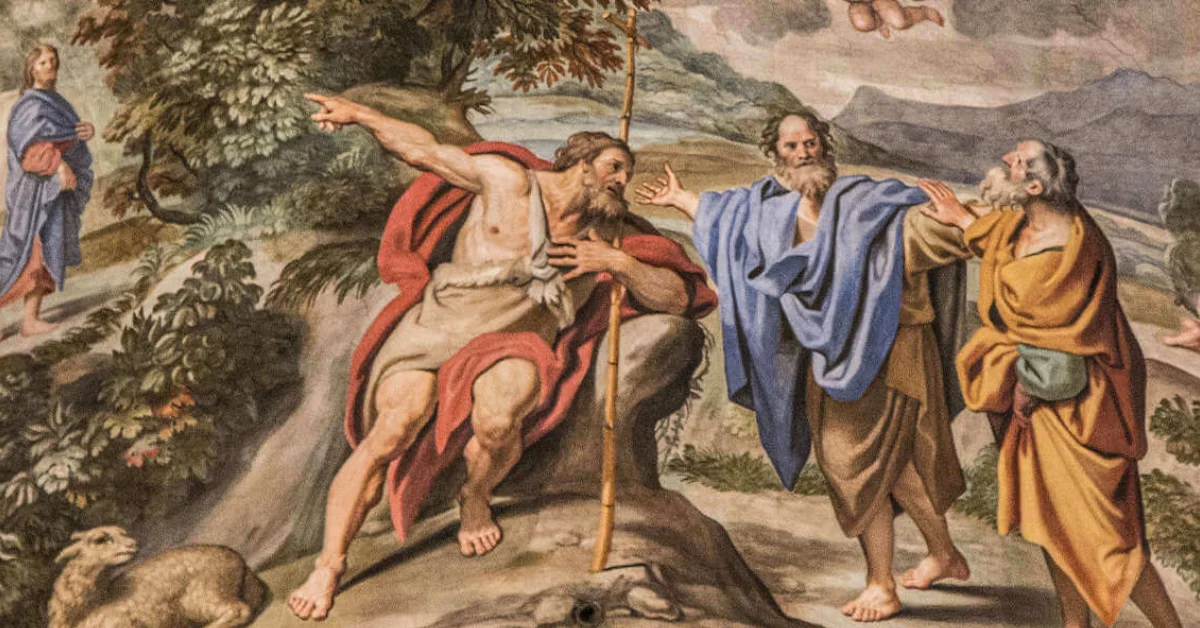
For those discerning and preparing for priesthood, these readings ask a gentle but demanding question: Do we believe that our call is God’s work before it is ours? And are we willing, like the servant, the psalmist, Paul, and John, to let that call send us beyond what feels sufficient or safe?
Vocation is not finally about what we will do, but about whom we belong to. When we allow ourselves to be named, claimed, and sent by God, our lives—like John’s—become a signpost. And even if our role is simply to say, “Behold the Lamb of God,” that is enough.
Rev. Michael MacInnis
Saint John Seminary, B.A.
Weston Jesuit School of Theology, M.Div.
Weston Jesuit School of Theology, Th.M.
Profile See all posts© 2026 All Rights Reserved
Site by 