
At Epiphany, a feast of light, we read one of the great “light” passages from the Prophet Isaiah. Jerusalem is told: “Arise! Shine, for your light has come, the glory of the Lord has dawned upon you” (Isa 60:1). Then Isaiah gives his vision of the restored Jerusalem, the radiant city to which all nations will stream.
This Sunday’s reading from Isaiah develops the theme of light. For the glorious vision of Isaiah 60 to be realized, something else must happen first. For God’s city to become light for the nations, God’s people are to become light in the Lord. The Lord’s light is to shine through justice and compassion, which open the world to His healing radiance: “Then your light shall break forth like the dawn, and your wound shall be quickly healed” (Isa 58:8).
The realization of God’s glory on earth passes by way of our openness to Him and our attentiveness to others. Healing and light are inseparable. The people become light in the Lord precisely through works of justice and compassion. Today’s first reading assures us that it is then that “your light shall break forth like the dawn, and your wound shall quickly be healed.”
In this way, the Church radiates the Lord’s own light, as from a lampstand (today’s Gospel). The Church proclaims “Christ Crucified” (second reading), holding Him up as the source of illumination and healing. Indeed, the Church herself is a “mystery of reflected light” (Pope Benedict XVI). She reflects a light she has made her own: we are to reveal the radiant face of Christ to the world. People are to meet the face of God in us, His witnesses.
But what must be done for our light to break forth like dawn and our wounds to be healed? The Lord—through Isaiah—spells it out: “Share your bread with the hungry, shelter the oppressed and the homeless; clothe the naked when you see them, and do not turn your back on your own.” Isaiah presses the point further: “If you remove from your midst oppression, false accusation, and malicious speech; if you bestow your bread on the hungry and satisfy the afflicted; then light shall rise for you in the darkness, and the gloom shall become for you like midday.”
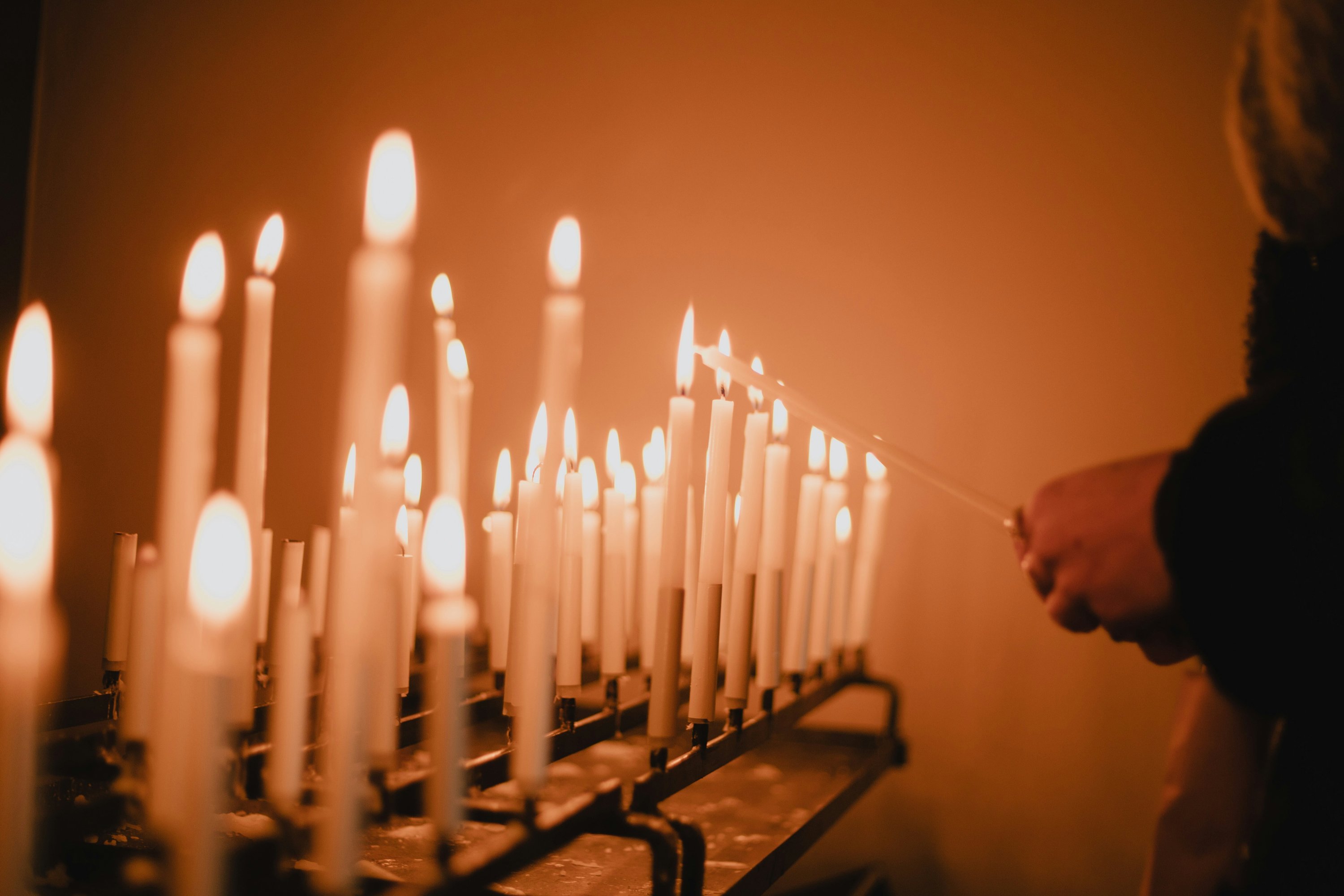
The healing of the people is linked to their becoming light in the Lord through justice and compassion, both of which are expressions of holiness. For Isaiah, sins against the most vulnerable—the widow, the orphan, and the stranger—are sins against the holiness of God Himself. There is no compartmentalization here. The worship that pleases the Lord is offered with clean, just, and merciful hands. There is a real connection between doing good—removing injustice and evil—and the radiance of the divine light shining in us. The responsorial psalm echoes this: “The just man is a light in the darkness for the upright.”
Most of all, the “Just Man” is Jesus Christ, the Light of the World. His light is restorative, illuminating, and contagious. In today’s Gospel, He tells His followers: “You are the light of the world.” We are to reflect a light that is not our own but Christ’s. Yet it becomes ours when we abide in Him.
“You are the light of the world” is an invitation as much as a statement. Jesus does not say, “Admire the light— isn’t it nice?” He says, “You are the light.” It is a calling before it is a compliment. Implicitly, it is a commandment of the New Covenant.
Mary once carried the true Light in her arms into the Temple. By becoming “light in the Lord,” we are to carry this Light from the Temple of the Church into the world. We become living lights, revealing the Lord’s face. The Lord gives us His light lest, in our lives, we end up chasing shadows and missing the real thing. The human heart was made for Christ the Light, not for spluttering, artificial imitations.
Only “Jesus Christ and Him crucified” (second reading) is the light that restores what darkness has wounded. He is the all-consuming yet tender love of God—the burning love of divine charity. In Jesus, Isaiah’s “then” is fulfilled: “Then your wound will be quickly healed.” He alone glorifies the Father and heals the world, yet He wants to do this in us: “Your light must shine before others, that they may see your good deeds and glorify your heavenly Father.”
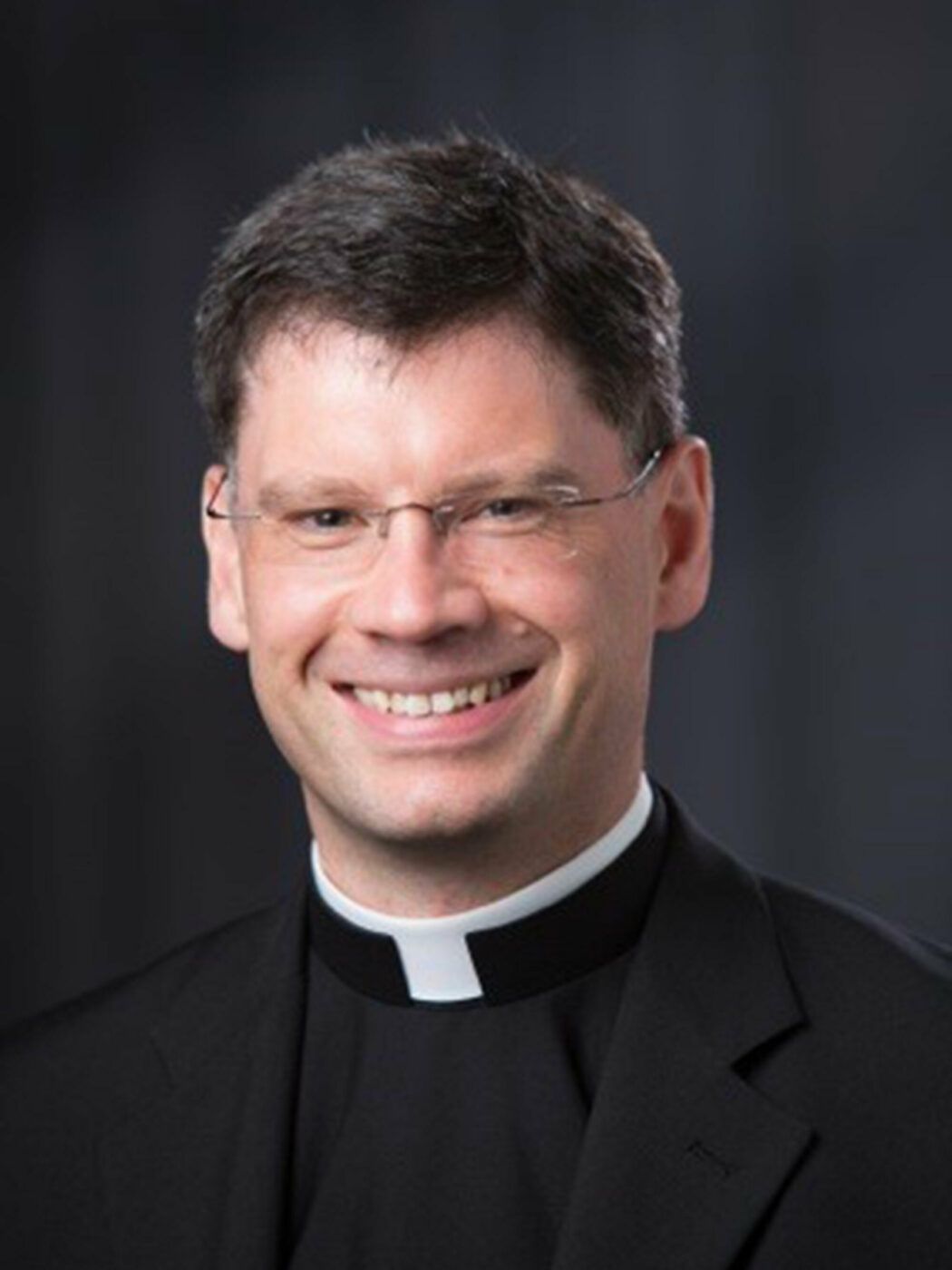
Rev. Joseph Briody
National University of Ireland, Maynooth, B.A.
Pontifical University, Maynooth, B.Ph.; B.D.; S.T.L.
Pontifical Biblical Institute, Rome, L.S.S.
Boston College School of Theology and Ministry, S.T.D., 2020
Profile See all posts© 2026 All Rights Reserved
Site by 