Christ’s resurrected body is real. The scars on His body are no longer signs of weakness but glorious trophies confirming His identity. He who died, now lives. His risen body is the very same that grew in His mother’s womb, “shivered in Bethlehem, labored in Nazareth, fasted in the wilderness. The body which had hungered and thirsted and slept, which had been wounded and suffered and died, the same body, too, that He had taken into His hands and given to us . . . at the Last Supper” (Caryll Houselander, The Risen Christ, 57). It is same body He gives in the Eucharistic Sacrifice.
The glorious wounds still carried by the Risen Jesus show that He has “overcome the world” (John 16:33). They show that His resurrection is the victory of Divine Mercy and of peace. Without God’s mercy there can be no peace. Mercy and peace flow only from the pierced side of Christ which opens up for us the heart of God and draws us in.
Peace is the Easter greeting of the Risen One. He can give peace because He bore the brunt of evil; He carried the burden of sin; He “allowed Himself to be nailed to the cross, embracing every cross borne in every time and place throughout human history” (Pope Leo, Palm Sunday, 2026). He died our death for us, taking the sting out of death. Only He purifies and heals our humanity. No tomb can hold the Lord of Life, nor can any grave keep forever those redeemed in His mercy.
Mercy is an expression of who God is. Because He is God and not man, He acts very differently from us. He gives us the power to act differently, and so to break the cycles of vengeance and violence. When Saint John Paul II named this Sunday that “of Divine Mercy,” he appealed to the world to turn back to God’s mercy in the holy wounds of Christ. Pope John Paul II had lived through the horrors of World War II and Communist oppression. He recognized Divine Mercy as God’s answer, the only answer, to human sin and despair.
God’s mercy in Christ summons us to new life. We could not earn this mercy, yet His wounds remind us of the price He paid—of how precious we are in His sight. Nor can we separate His mercy from the call “Do not sin again,” because the mercy He continually extends to us is an invitation to be healed by His wounds (Isa 53:5) and to live in His presence.
Several acts are associated with this feast. Perhaps a forgotten aspect is the need to show mercy ourselves. Mercy has been shown to us and we must show mercy. Scripture assures us that if we show mercy to others, our own wound will be healed (Isa 58:8). One saintly nun put it: “Open your heart to the hurt of others, and your own wound will be healed” (E. Varden, Entering the Twofold Mystery, 145).
Mercy is an attribute of God, and we are most like Him when we show mercy. We also become fully alive and fully ourselves when we show His mercy. We are least like Him when we refuse that mercy to others and harden our hearts.
In today’s Gospel, the Risen Jesus comes looking for us. He passes through closed doors to come close. He gives His first priests the gift of lifting the burdens that weigh heaviest on the human heart, that is, He gives them His own power to forgive sins. Indeed, Confession is the first gift of the Risen Lord. It’s as if, after His resurrection, He could hardly wait to give us this gift. That’s how important this Sacrament of Mercy is!
In the Sacrament of Reconciliation, heavy stones are rolled back. Dark and dead weights are lifted. Blocked paths to the Lord and to true freedom are cleared. Christ speaks words of peace. Lost joy is restored. Consciences are relieved. Baptismal grace is renewed. Love overcomes fear. We are made new in God and restored in ourselves. Only in His mercy can we find this peace a strident world can never give.
Divine Mercy is the power of Christ’s glorious Cross, flowing in torrents from His pierced Heart. His mercy is immeasurably greater than all the evil of the world. His mercy endures forever!
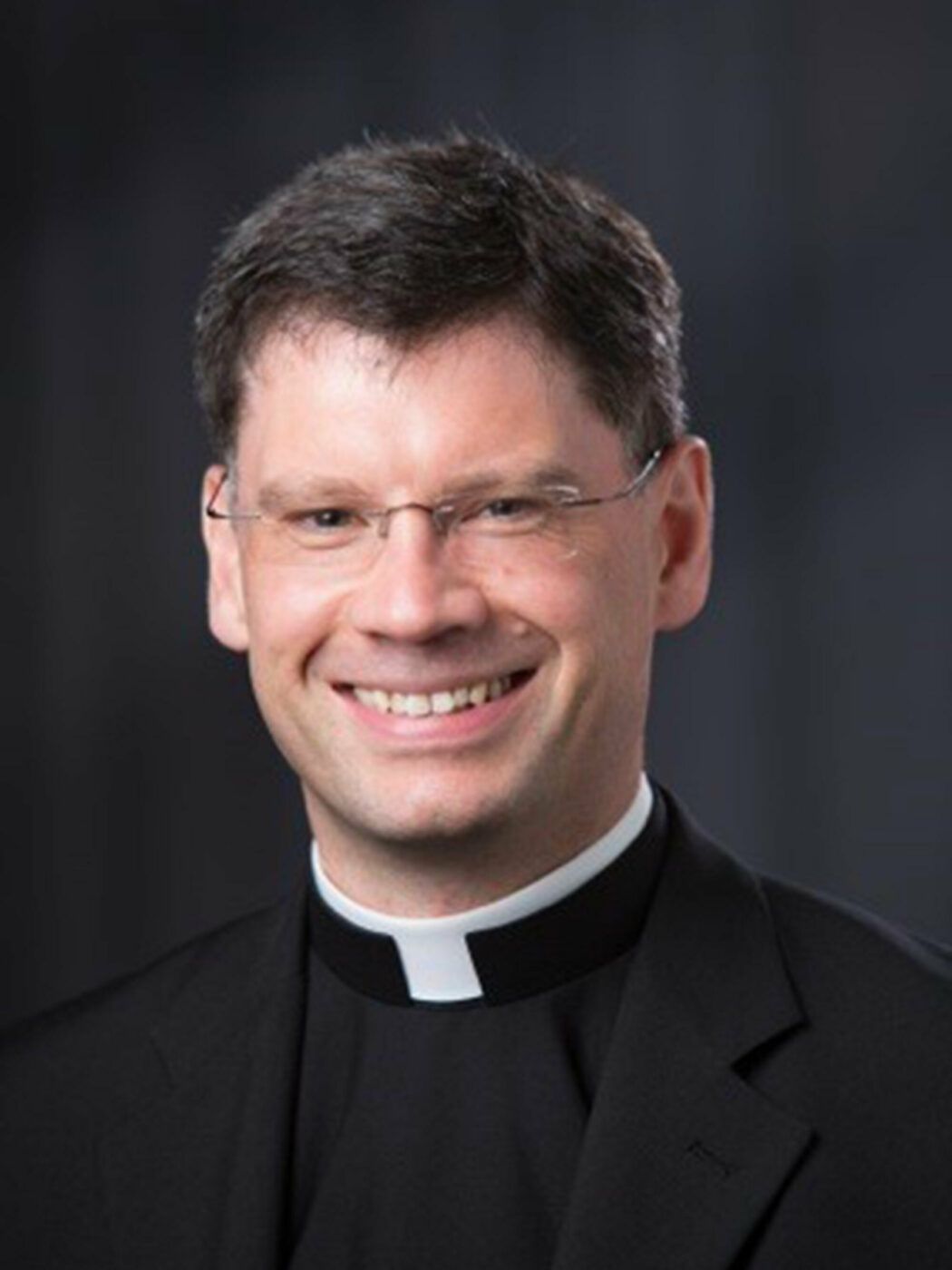
Rev. Joseph Briody
National University of Ireland, Maynooth, B.A.
Pontifical University, Maynooth, B.Ph.; B.D.; S.T.L.
Pontifical Biblical Institute, Rome, L.S.S.
Boston College School of Theology and Ministry, S.T.D., 2020
Profile See all posts© 2026 All Rights Reserved
Site by 