
The Star that Astonishes the World
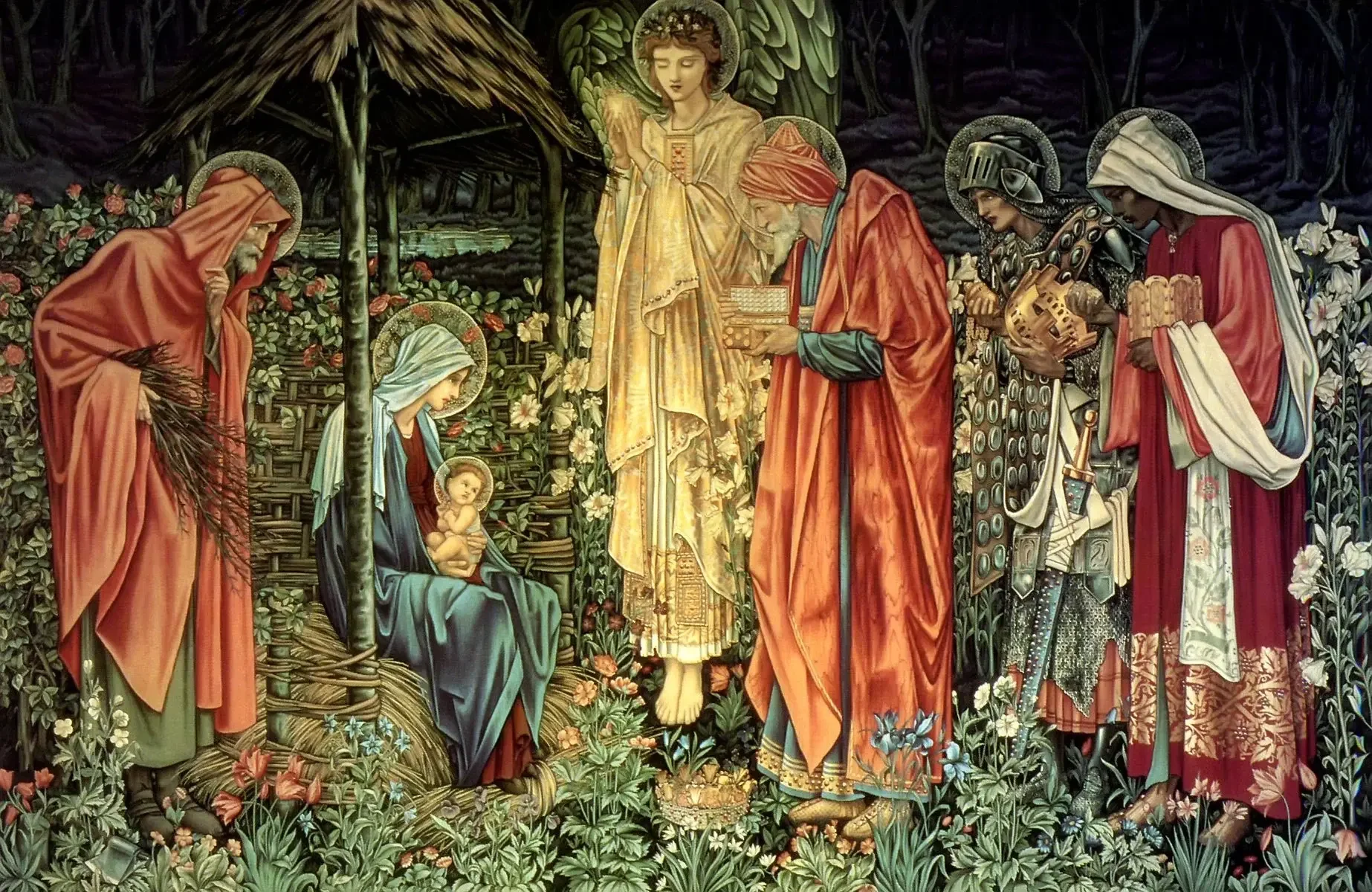
I love the Epiphany and its account of the Magi and the star. As so often in the Gospel, we encounter a delightful paradox: while the star leads the Magi to the Child, it is the Child who guides the stars. It is the Child who draws the Magi to Himself. In drawing them, He draws us all, for He promised, “When I am lifted up from the earth, I will draw all people to myself” (Jn 12:32).
The star that astonishes the world leads to a poor dwelling where the True Light lies hidden. It leads me to Christ and urges me outward toward others. Being drawn to Christ is the opposite of self-absorption. The Magi stand in stark contrast to Herod: they are captivated by God revealed in Christ, not by themselves or their own power. Bishop Erik Varden expresses this well: “As long as I need to draw attention to myself, thirsty for recognition and acclaim, stuck in selfie-mode, I have not truly yielded to the fascination of God’s epiphany in Christ.”
And yet, how strangely unfascinated we are by the Christ Child and by the star that leads to Him. “Behold the star that astonishes the world…”—these words of Pope Leo at Christmas Midnight Mass remind us that “there is no darkness this star does not illumine.” In the light of the star that proclaims Christ’s birth, there dawns for us a new and eternal life. The star points unfailingly to Christ, to a hope that does not disappoint.
The True Light Lies Hidden
This wondrous mystery—discovered by the Magi in a poor dwelling by the light of a star—has long lain hidden in the pages of the Old Testament. The lights of heaven serve their Lord, and mark feasts and seasons (Gen 1:14). At His summons they shine forth answering with joy, “Here we are!” (Bar 3:34–35). The star that astonishes the world foretells the coming of a new and great king: “A star shall come forth out of Jacob, and a scepter shall rise out of Israel” (Num 24:17).
Herod would have known this prophecy linking star and ruler, along with Bethlehem, the promised place (Micah 5:2). This fuels his fear and unleashes his frenzied assault on the male children of Judea. The Magi, by contrast, come before the Christ Child and place themselves wholly at His disposal.
The star invites us, as it invited them, to encounter Christ, to be changed by Him, and to serve Him in others. It leads us to conversion and loving service.
“A Different Way”: Conversion and Service
Transformed by their encounter with Jesus, the Magi did not return as they had come. They “went home by a different way.” Their journey to Christ required leaving much behind—and so does ours. True conversion always involves a letting go: of old habits, familiar securities, and even the old self we have been. This leaving behind can be painful, yet it is also freeing. Gerard Manley Hopkins, reflecting on his own Christmas conversion, wrote that “the Bethlehem Star may lead me, to the sight of Him who freed me, from the self that I have been.” Conversion is a change of direction and a transformation of the heart. It is meeting Christ and being healed from ourselves and within ourselves.
But conversion does not end there. To turn to Christ is also to be turned toward others. Charles Dickens gives voice to this truth in A Christmas Carol through the lament of Jacob Marley. Condemned by his own indifference, Marley grieves not for crimes committed, but for love withheld. He mourns how he passed through life absorbed in business, blind to mercy and compassion: “Why did I walk through crowds of fellow-beings with my eyes turned down and never raise them to that blessed Star which led the Wise Men to a poor abode! Were there no poor homes to which its light would have conducted me!” Marley’s regret reveals that the Star always points beyond comfort and self-interest. It leads to Christ and to the poor dwellings where Christ chooses to be found. It places us at the disposal of Christ.
At the Disposal of Christ and His People
First, the star leads us to the Child in the arms of Mary, that we may adore and serve Him as Light from Light, True God from True God. Second, the light of this same star guides us to other Bethlehems—to other poor homes where Christ is served in His poor ones. These may be far away, or as near as our own home, where we fail to love because we fail to see rightly. Failure of perception often leads to failure in love. Failure to love often blinds us to God in Christ and to Christ in our brothers and sisters.
The Magi were humble enough to allow their perception to be purified by love and truth. Like them, we place ourselves at the disposal of the Lord Jesus and His people. This is the Catholic priest’s Way of Life. More fundamentally, it is what it means to be a Christian, a disciple. Here lies our fulfillment.
Like the Magi, we allow ourselves to be transformed by the encounter with Christ—above all before our Incarnate Lord in the Blessed Sacrament. Strengthened by His presence there, we can follow the blessed star to where He lies hidden in other poor abodes.
A very Happy New Year to the wider Saint John Seminary community! May we be led by the star that astonishes the world—and fascinated by God’s epiphany in Christ. Remember: no darkness remains unillumined by this star.
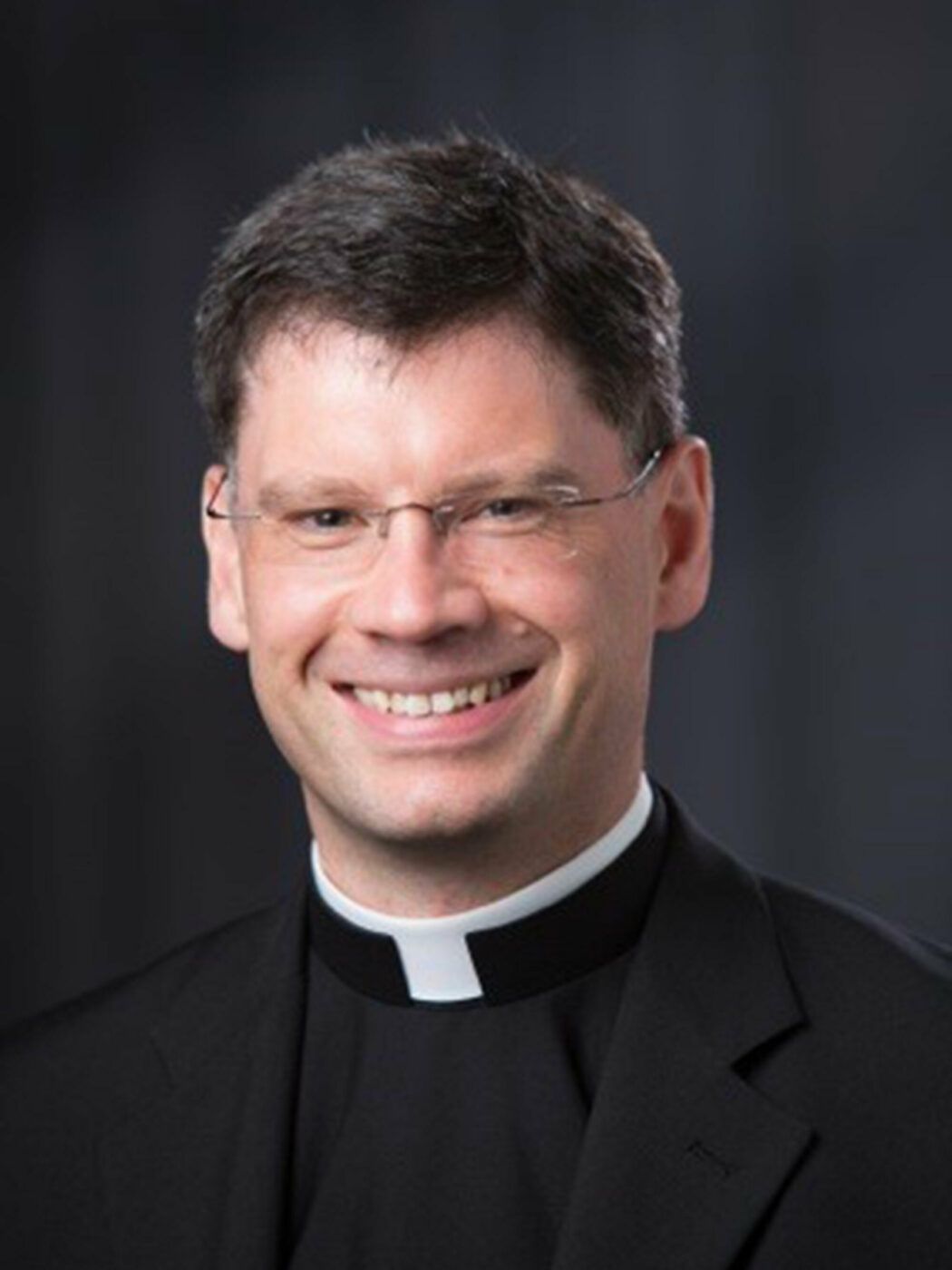
Rev. Joseph Briody
National University of Ireland, Maynooth, B.A.
Pontifical University, Maynooth, B.Ph.; B.D.; S.T.L.
Pontifical Biblical Institute, Rome, L.S.S.
Boston College School of Theology and Ministry, S.T.D., 2020
Profile See all posts© 2026 All Rights Reserved
Site by 