
On behalf of the seminarians, faculty, and staff of Saint John’s Seminary, I want to wish you and your families a blessed and joyful Christmas!
Every year, our celebration of Christmas begins with our listening to and reflecting on the Gospel accounts of the birth of our Lord and Savior, Jesus Christ. We acknowledge the ways God has fulfilled the promises of old and appreciate the ways the event of Christ’s birth is a promise for the future. Christmas beckons us to look back in faith and understand how God has fulfilled his promises and to look forward in hope to what God has yet to do on our behalf through his new-born Son.
Every year, our preparation for Christmas begins in Advent, where we are especially presented with the prophecies of Isaiah and John the Baptist whose words point us to the coming of the Lord. Also, every third year, the Sunday Gospel passages come from Matthew. For that reason, I would like to focus this year on what Matthew has to say about the birth of Jesus Christ.
At the first Mass celebrated on Christmas, the Vigil Mass, the first chapter of the Gospel according to Matthew is proclaimed. His Gospel begins with the title, “The Book of the genealogy of Jesus Christ, the son of David, the son of Abraham.” All three titles are important. The genealogy will go on at some length to list the generations between Abraham and the birth of Jesus. But it is the titles and names that Matthew lists for Jesus that are important.
The name “Jesus Christ” identifies him as the Messiah, and what follows in the Gospel, first by way of the genealogy and then by way of the rest of the Gospel emphasizes that Jesus is the fulfillment of Jewish messianic hopes.
The title “Son of David” is explained and clarified in the genealogy and in the verses that follow, when the angel appears to Joseph, “son of David,” and explains to him that the child Mary carries is conceived by the creative power of God’s spirit. The angel announces to Joseph that he is to take Mary as his wife. She will bear a son, and Joseph is to act as the child’s father, and to name him “Jesus, “ a name that means “God saves,” because he will save his people from their sins (Matthew 2:21). By naming Jesus, Joseph brings him into the Davidic line, thereby making him “Son of David.” Jesus’ people will all those who accept his saving act, those whom Jesus will later refer to as his “church” (Matthew 16:18). Jesus’ church will include all those who accept his life-giving death.
The “son of Abraham” title is more subtle, but later in the Gospel, Matthew will give indications that Jesus, the Son of Abraham, is the foundation and fulfillment of God’s promise to and blessing of Abraham as “the ancestor of a multitude of nations” and by whose offspring “all the nations of the earth shall be blessed” (cf. Genesis 17:2-8 and 22:17-18). We find a clear indication of fulfillment in the very next chapter of Matthew’s Gospel with the account of the Magi who, as representatives of the nations, will come to pay homage to the newborn King of the Jews (Matthew 2:1-12).
Lastly, Matthew sums it all up by observing that all of what has been presented in this first chapter is the fulfillment of prophecy – specifically, the words God gave to the prophet Isaiah, some 700 years before the birth of Christ: “Look, the virgin shall conceive and bear a son, and they shall name him Emmanuel, which means God with us” (Isaiah 7:14; Matthew 2:23). What amazes us is that after this moment, Jesus is never addressed as Emmanuel, although he will promise, at the end of Matthew’s Gospel, that “I am with you always, to the end of the age” (Matthew 28:20).
Forty-two generations of Jesus’ lineage preceded his birth. It took seven hundred years for the prophecy of Isaiah to find fulfillment. But all of the things that could prevent the saving presence of Jesus birth – sin and death, especially, did not prevent God from carrying out the promises and prophecies he made to his people. Pope Benedict XVI reminds us that, “ The prophecy of Isaiah to King Ahaz 700 years before the birth of Christ was addressed not merely to Ahaz. Nor was it addressed merely to Israel. It was/ is addressed to us, to all humanity. The sign that God himself announces is given not for a specific political situation but concerns the whole history of humanity. … Should [we] not be convinced that God has given us this sign in the birth of Jesus from the Virgin Mary. Emmanuel has come… God has given us a great sign intended for the whole world.[Joseph Ratzinger/Pope Benedict XVI, Jesus of Nazareth: The Infancy Narratives, 50-51]
Jesus might never have been addressed as Emmanuel after the annunciation to Joseph, but Jesus is and remains, always, “God with us.”
As we celebrate the birth of God’s Son, our Lord and Savior Jesus Christ, let us pray for one another, for our families, our community, our country, and our world – that we may always know God’s peace, the presence of Jesus in our hearts and homes, and, one day share in the fullness of Christ’s glory.
Merry Christmas!
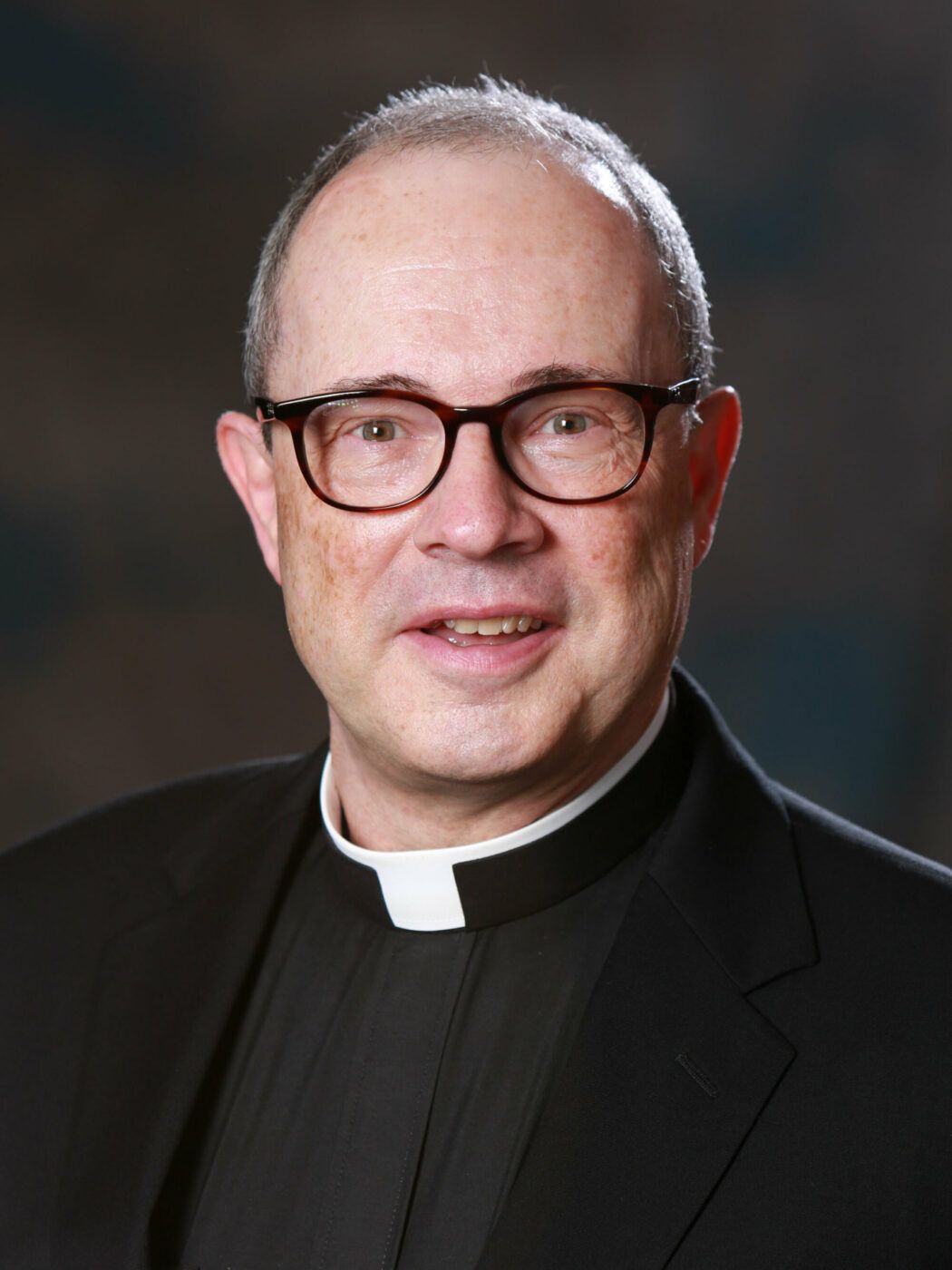
Rev. Msgr. Stephen E. Salocks '80
Rensselaer Polytechnic Institute, B.S.
Saint John's Seminary, M.Div.
Pontifical Biblical Institute, S.S.L.
Profile See all posts© 2026 All Rights Reserved
Site by 