
Growing up, my mother often reminded my siblings and me to know who we are and act accordingly; that we are proud members of our family clan, that we bear the family name unabashedly, that our father is very proud of us for who we are, etc. But she would also tell us that most importantly, we are beloved children of God, so we should act like it, like we believe it and be ready to prove it in our daily conduct. The way you live your life should be a living proof to your faith so that anyone who encounters you will have reason to give thanks to God.
I carry this with me until now; I try to always call to mind who I am, what I am, why I am in existence, for whom I live and where I am going. Reflecting on the readings of this weekend, I get the sense that this is what we all need to do every moment of our lives; to remind ourselves of who we are, what we are, the reason for our being, whom we belong to, whose child we are.
As the disciples of Jesus continue to enjoy his presence after he rose from the dead, knowing that the time has come for him to ascend to his father, Jesus begins to prepare them of his earthly departure, his ascension. As he speaks to them about several things, he essentially reminds them of who they are, whom they belong to, whose child they are. He tells them, “I will not leave you orphans; I will come to you…On that day you will realize that I am in my Father and you are in me and I in you.” He reminds them of their identity in him; bonafide children of God who lives in them.
But it does not end with knowing who you are or to whom you belong, for if there is a cause for you to identify yourself, would you be able, would you answer your name, would you live up to expectations? In short, would you be able to defend your Christian identity? Jesus, truly knowing that this is not easy in the world of today, and even more so in his earthly days, promises to ask the Father to send the Paraclete, “he will give you another Advocate to be with you always,” so that we can bear witness to our identity in the world.
The word Advocate, from the Greek Paraklētos, used in the Gospel of John about five times, always refers to either Jesus or the Holy Spirit. It denotes a spokesperson, an advocate, who defends an accused in a legal setting. Jesus uses this term in this weekend’s Gospel for the Holy Spirit as one who is sent to strengthen the faith and witness of his disciples when he ascends to the Father (Jn 14:16), as well as to instruct them in the truth (Jn 14:26; 15:26), and to defend them against the persecutions of the evil one (Jn 16:7–11), who comes to sow the seed of doubt, to shake their faith and make them skeptical about their identity. The Paraclete advocates for the Truth and to help us speak and defend our faith in times of trial. So, the Paraclete could help us become “paracletes,” spokespersons especially when we are called to answer our names and defend our Christian identity. At least this is the hope of St. Peter for us this weekend.
In the Second Reading this weekend, St. Peter exhorts us to “always be ready to give an explanation to anyone who asks you for a reason for your hope but do it with gentleness and reverence, keeping your conscience clear, so that, when you are maligned, those who defame your good conduct in Christ may themselves be put to shame.” We are encouraged today to be spokespersons, paracletes whenever anyone asks for a defense for our faith, our hope, our identity in God. In fact, as Christians, it is our divinely appointed function, from which we are not supposed to excuse ourselves.
Praying the Divine Office this past week, one of the readings, in my opinion captures this call to witness to our Christian identity. It is from an anonymous letter to a cultured unbeliever called Diognetus, written in the early to mid-second century A.D. (Nn. 5-6; Funk, 397-401). It appears in the Office of Readings for Wednesday of the fifth week of Easter.
Reflect on this: “Christians are indistinguishable from other men either by nationality, language or customs. They do not inhabit separate cities of their own, or speak a strange dialect, or follow some outlandish way of life. Their teaching is not based upon reveries inspired by the curiosity of men. Unlike some other people, they champion no purely human doctrine. With regard to dress, food and manner of life in general, they follow the customs of whatever city they happen to be living in, whether it is Greek or foreign.
And yet there is something extraordinary about their lives. They live in their own countries as though they were only passing through. They play their full role as citizens, but labor under all the disabilities of aliens. Any country can be their homeland, but for them their homeland, wherever it may be, is a foreign country. Like others, they marry and have children, but they do not expose them. They share their meals, but not their wives. They live in the flesh, but they are not governed by the desires of the flesh. They pass their days upon earth, but they are citizens of heaven. Obedient to the laws, they yet live on a level that transcends the law.
Christians love all men, but all men persecute them. Condemned because they are not understood, they are put to death, but raised to life again. They live in poverty, but enrich many; they are totally destitute, but possess an abundance of everything. They suffer dishonor, but that is their glory. They are defamed, but vindicated. A blessing is their answer to abuse, deference their response to insult. For the good they do they receive the punishment of malefactors, but even then they rejoice, as though receiving the gift of life. They are attacked by the Jews as aliens, they are persecuted by the Greeks, yet no one can explain the reason for this hatred.
To speak in general terms, we may say that the Christian is to the world what the soul is to the body. As the soul is present in every part of the body, while remaining distinct from it, so Christians are found in all the cities of the world, but cannot be identified with the world. As the visible body contains the invisible soul, so Christians are seen living in the world, but their religious life remains unseen. The body hates the soul and wars against it, not because of any injury the soul has done it, but because of the restriction the soul places on its pleasures. Similarly, the world hates the Christians, not because they have done it any wrong, but because they are opposed to its enjoyments.
Christians love those who hate them just as the soul loves the body and all its members despite the body’s hatred. It is by the soul, enclosed within the body, that the body is held together, and similarly, it is by the Christians, detained in the world as in a prison, that the world is held together. The soul, though immortal, has a mortal dwelling place; and Christians also live for a time amidst perishable things, while awaiting the freedom from change and decay that will be theirs in heaven. As the soul benefits from the deprivation of food and drink, so Christians flourish under persecution. Such is the Christian’s lofty and divinely appointed function, from which he is not permitted to excuse himself.” This is what it means to bear witness to the faith doing it “with gentleness and reverence, keeping your conscience clear” as St. Peter admonished.
As my mother would remind my siblings and me that we are Christians, beloved children of God, and should act like it, like we believe it and be ready to prove it in our daily conduct, this letter equally invites us, in line with Peter’s invitation today, that our lives should be living proof to our faith. And as we celebrate Mother’s Day today, a day dedicated to honor and express appreciation to all those in the vocation of motherhood, we thank God for the gift our mothers, for their impact in families and society, for their sacrifices, guidance, and love, for their examples of how to live as paracletes, speaking out, advocating and defending our faith in any situation.
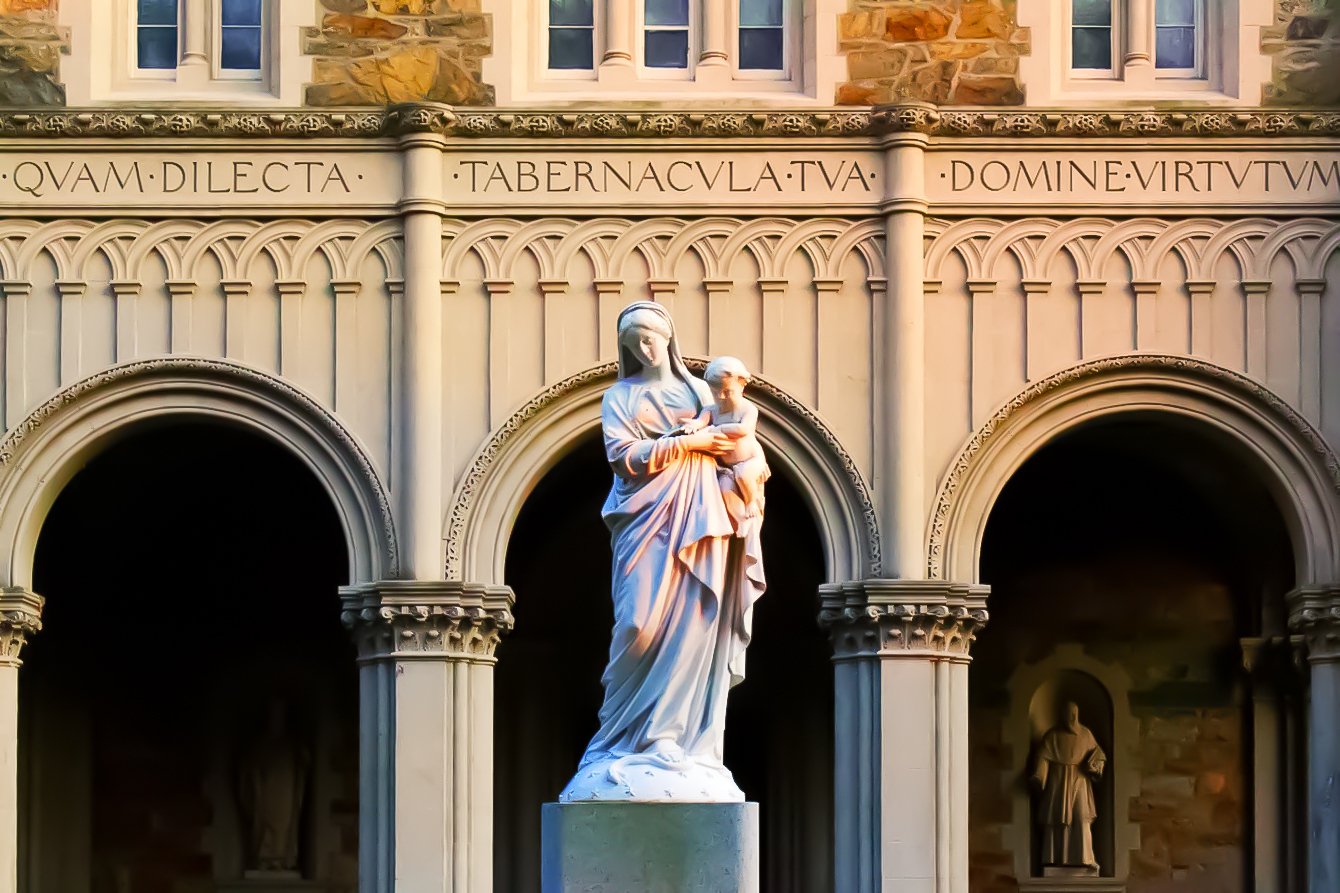
May our Blessed Virgin Mary, Mother of God, Mother of Christ, and Mother of the Church continue to intercede for us, now and at the hour of our death, Amen!
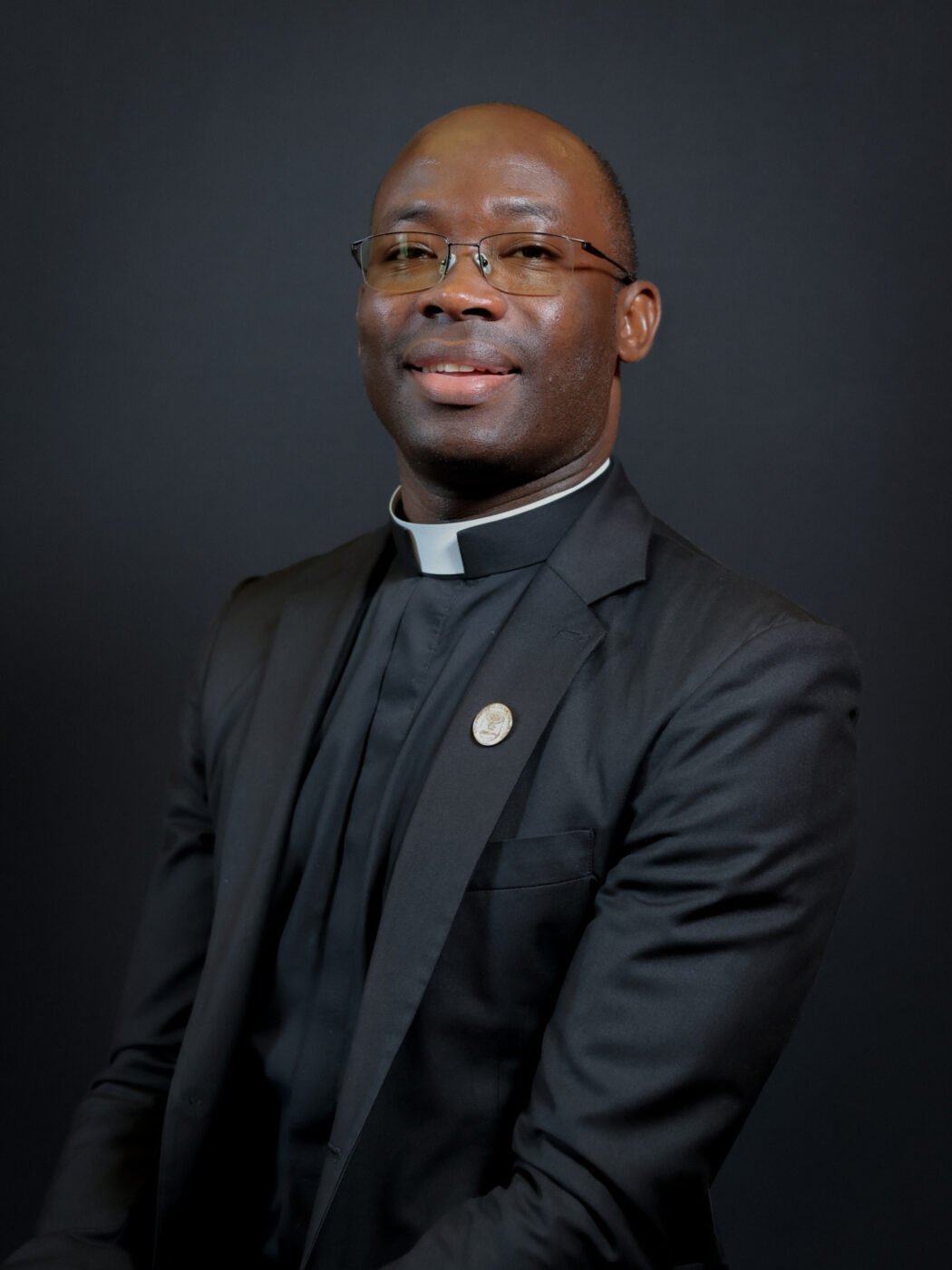
Rev. Stanislaus Achu
St. Joseph Major Seminary, B. Phil., 2015
Saint John’s Seminary, M.Div., 2020; S.T.B., 2020
Boston College School of Theology and Ministry, S.T.L., 2024
Profile See all posts© 2026 All Rights Reserved
Site by 