
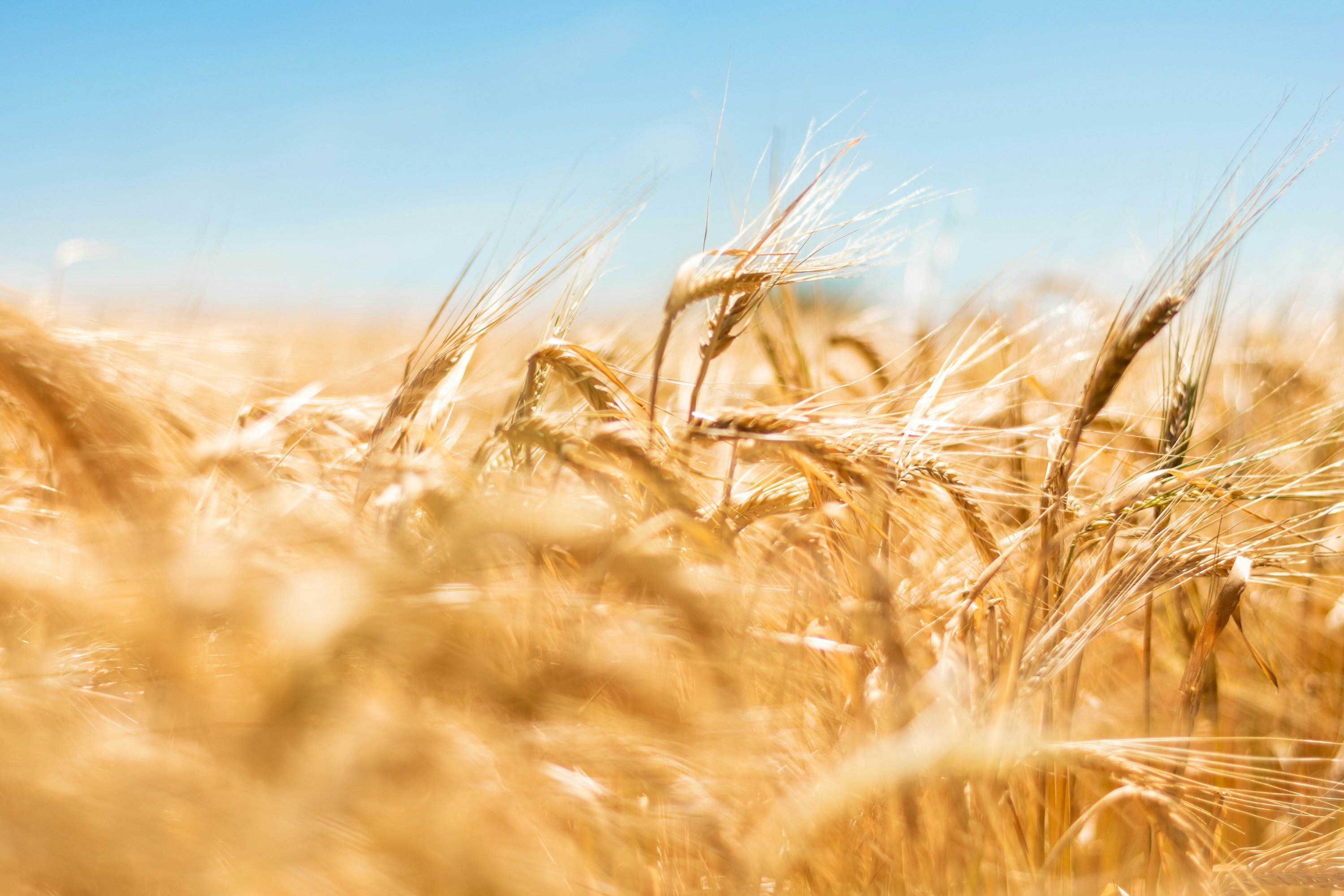
In the Gospel, God plants good seed, and the enemy comes along and plants bad seed. In Jesus' day, there were actually laws against this exact thing because people knew it would ruin a crop and devastate a landowner.
It is interesting to consider that when you plant weeds in someone else's wheat, you gain nothing yourself—you simply prevent them from receiving the harvest they intended. In fact, there are two significant consequences of planting these weeds. First, the weed, called darnel, looks almost identical to wheat in its early stages, making it nearly impossible to distinguish between the two at first. Second, darnel is poisonous. It also develops an extensive root system that intertwines with the wheat, making it impossible to pull up the weeds without also uprooting the wheat.
The farmer says something striking when his servants ask, "Didn't you sow only good seed? Where did these weeds come from?" He simply replies, "An enemy has done this."
That line is so revealing, and it is one of the reasons we need to be prepared.
Jesus begins this parable by saying, "The Kingdom of Heaven is like this." Pause there for a moment. He does not say, "This is what the world is like," or, "This is what bad people are like." He says, "The Kingdom of Heaven is like this."
The Kingdom of God, as it exists on earth, contains both wheat and weeds. This is not what God desires, but it is what He is willing to tolerate until the harvest.
The first step, then, is not to panic.
The Church has been like this from the very beginning. God does not desire the weeds, but He tells us not to panic. If we are going to live in the Kingdom of God, we must understand that there is an enemy who has done this. The enemy is deliberate and precise. He seeks to sow division, fear, and wounds.
Sister Miriam James once said at a SEEK Conference that our wounds are not arbitrary. Often, our wounds are connected to our own sins. The wounds we carry in relationships, the fears we harbor, and the distrust we experience can often be traced back to our own choices.
But there is another reason.
The enemy aims his attacks where they will cause the greatest damage. That is why our wounds are not arbitrary. He targets the places that will create the deepest division and the greatest suffering.
The answer to weeds in this life is not simply pulling them up.
The answer to weeds is more wheat.
That is why the Church can never become self-righteous. We recognize that weeds exist—even within Christ's Church—and we also recognize that we are not exempt from them. At the same time, we cannot become complacent or lazy. Christ's answer is not simply removing weeds; it is cultivating more wheat.
That begins with me.
It has to be personal.
Here is the Kingdom of Heaven, and you are part of it. Here is the Church, and you are part of it. The wheat and the weeds are not merely "out there." They are within the human heart.
That is why Aleksandr Solzhenitsyn famously wrote, "The line dividing good and evil cuts through the heart of every human being."
Evil is not simply external to us. The weeds are not only somewhere outside; they are in me.
There is another powerful illustration of this truth.
When Adolf Eichmann, one of the principal architects of the Holocaust, was captured and brought to trial, one of the witnesses was Yehiel Dinur, a Holocaust survivor. As Dinur looked at Eichmann, he suddenly broke down in tears. It was not because he was staring into the face of a monster. It was because he saw an ordinary man—someone who appeared mild-mannered, polite, and frighteningly normal.
In that moment, he realized that the capacity for evil exists in every human heart.
This is the story of all our lives. The line between good and evil passes through the human heart.
If I am going to become wheat in God's Kingdom, then I must cultivate the wheat within my own heart. That means ongoing conversion. It means saying no to the weeds and yes to God's grace.
Here is the beautiful part.
It only takes a little leaven to raise the whole loaf.
It only takes one person choosing virtue over vice. One person saying "yes" to God's grace instead of sin. One person deciding to become wheat rather than weeds.
Your story is not over.
The story of the Church is not over.
All it takes is one.
One person willing to choose holiness. One person willing to save one soul.
The offertory verse for the Feast of the Sacred Heart of Jesus beautifully expresses this longing:
"My heart hath expected reproach and misery; and I looked for one that would grieve together with me, but there was none; and I sought one that would console me, and I found none." (Psalm 69:20)
Saint Teresa of Calcutta heard these words every year as they were chanted during the liturgy. Her response was simple:
"Be the one."
Be the one who consoles Jesus. Be the one who satisfies His burning thirst for love.
A Missionaries of Charity sister once shared with me a letter Mother Teresa had written to her sisters about prayer. In it she reflected on these words:
"Tell Jesus, 'I will be the one.' Be with Jesus. He prayed and prayed, and then He looked for consolation, but there was none."
Mother Teresa was deeply moved by Christ's words: "I sought one that would console me, and I found none." Her response remained the same:
"Be the one."
Then she prayed and asked Our Lady to help us understand.
This is Mary's unique role.
Within her Immaculate Heart, she helps us understand the love burning within the Sacred Heart of her Son. Mary stood faithfully at Calvary. She understood His love, His thirst, and His sacrifice. She teaches us to thirst for Jesus and to make reparation for a love that is so often left unloved.
On July 16, Carmelites throughout the world celebrate the Feast of Our Lady of Mount Carmel. The Brown Scapular reminds us of Mary's maternal care and her constant intercession. It is a sign of our confidence that she accompanies us through every trial and leads us ever closer to Christ.
As you come to Mass this Sunday, pray that you may be the one.
God bless.
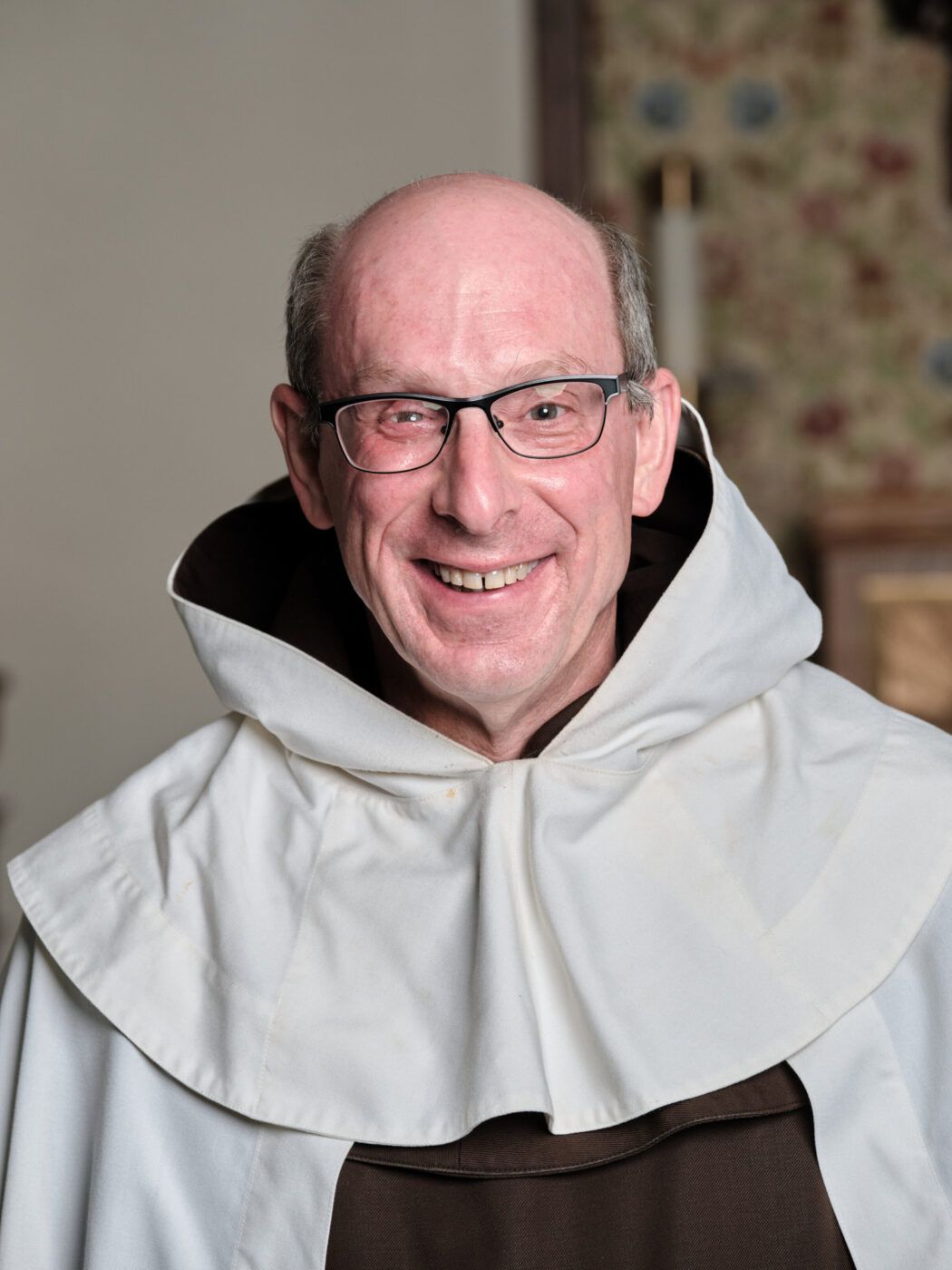
Rev. Donald Brick, OCD
Ferris State College, B.A., 1983
Catholic Theological Union, M.Div., 1999
Profile See all posts© 2026 All Rights Reserved
Site by 