
In the Baltimore Catechism, the Church is defined as having three branches or parts, called the Church Triumphant, the Church Militant, and the Church Suffering. By the “Church Triumphant” we mean all the faithful now in heaven, rejoicing with God that they have overcome the earthly battle and attained their salvation. By the “Church Militant” or “fighting Church” we mean all the faithful, all of us who are still here on Earth working out our salvation, engaging in the earthly battle with our spiritual enemies. By the “Church Suffering” we mean those who have gone through this world and are now in Purgatory, who are being purified from the last stains and consequences of their sins.
During the sacrifice of the Holy Mass, we pray for all these three branches of the Church, but especially, in the month of November, after we celebrate the Church Triumphant, on November 1, we the faithful are invited to pray for the Church Suffering, starting on the second day of the month. Praying for the faithful departed, the Church suffering, calls to mind for us the reality of death that we all will certainly face as well.
As a child, my parents taught my siblings and me to always pray for a happy death, committing ourselves to God’s hands, especially every night before we sleep. So our routine to ending every night’s prayers is always to say the following prayer (in my native vernacular): “Jesus, Mary and Joseph, I give you my myself, my heart and my soul; Jesus, Mary and Joseph, help me at the hour of my death; Jesus, Mary and Joseph, that I may rest with you in eternity; Jesus, Mary and Joseph, make our family like unto yours. Jesus, I love you, all I have is yours, yours I am, yours I want to be, do with me whatever you will.” It is essentially a prayer of preparation for we “know neither the day nor the hour.”
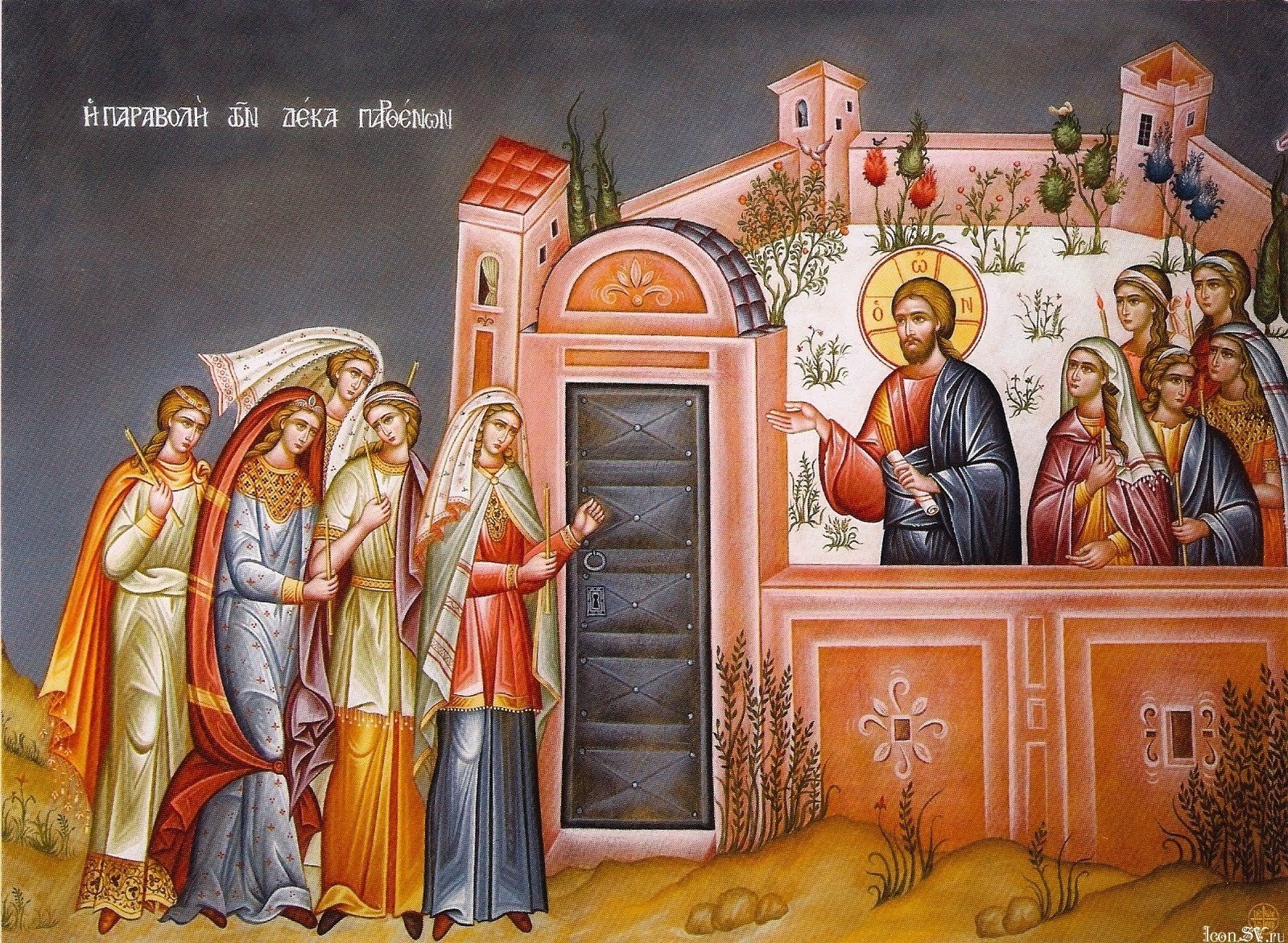
Today Jesus gives us that image in the parable of the ten virgins, the ten bridesmaids. They are waiting through the night for the bridegroom. All ten grew tired, all ten fell asleep. But when the call came, “Here is the bridegroom! Come out to meet him,” only those who have prepared were ready to enter the wedding feast. Jesus ends the parable with a sober invitation: “Therefore, stay awake, for you know neither the day nor the hour.”
The Church gives us this Gospel alongside St. Paul’s words in the Second Reading today, about those who have died. Together, they invite us to face death, not as a people without hope, not as a people who pretend death does not hurt, but as a people who believe that this world is not our home; we are made for heaven, to live with the Blessed Trinity after our earthly life through death.
St. Paul knows that death brings sorrow. He does not tell the Thessalonians not to grieve at all, as if belief in Jesus meant shedding no tears. He tells them not to grieve “like the rest, who have no hope.” The difference in Christian grief is not that we feel less pain in the face of death, it is that grief is held within a greater hope. “For if we believe that Jesus died and rose, so too will God, through Jesus, bring with him those who have fallen asleep.”
This is the heart of Christian hope: Jesus really died, and Jesus truly was raised. It is the mystery of our faith: “Mortem tuam annuntiámus, Dómine, et tuam resurrectiónem confitémur, donec vénias,” “We proclaim your Death, O Lord, and profess your Resurrection until you come again.” Because he has passed through death and risen, death cannot separate those who belong to him. What or who can separate us from the love of Christ? “For I am sure that neither death…nor anything else in all creation, will be able to separate us from the love of God in Christ Jesus our Lord,” (Rom 8:35–39). For, “In him the hope of blessed resurrection has dawned, that those saddened by the certainty of dying might be consoled by the promise of immortality to come. Indeed for your faithful, Lord, life is changed not ended, and, when this earthly dwelling turns to dust, an eternal dwelling is made ready for them in heaven,” Preface I of the Mass for the Dead.
St. Paul tells the Thessalonians to encourage one another with this promise, “we shall always be with the Lord.” This promise does not diminish the loss of a loved one or the pain of death, rather it gives our sorrow somewhere to go, an eternal destination. Christian hope does not ask us to call death harmless. It asks us to trust that Christ has entered death and opened a way through it; for “relying on [God’s] Almighty Power and Infinite Mercy and Promises, [we] hope to obtain pardon of [our] sins, the help of [God’s] grace, and life everlasting, through the merits of Jesus Christ, [our] Lord and Redeemer,” we pray in the Act of Hope. Life is changed not ended!
The First Reading today praises Wisdom as “resplendent and unfading,” that she is found by those who seek her. Wisdom is not merely cleverness or knowing many worldly things. In the light of today’s readings, it is learning to see life in the presence of God and to live according to what leads to salvation and eternal life. Death has a way of bringing that question to the surface. What, in the end, is worth giving our life to? We spend so much time worrying about appearances, possessions, recognition, ambitions, and the things we cannot keep beyond this life. But the thought of death can actually teach us to see the transience of what seems powerful or extraordinary in the eyes of the world, and to recognize that what ultimately and truly matters is our relationship with God and our self-giving love and sacrifice for our brothers and sisters.
This, of course, is not a reason to live fearfully, in despair and counting down the hours. It is a reason to stay awake and live a Christ-like life: to treat those we meet with mercy, forgiveness, patience, love, joy, charity, generosity, affection, care, etc. It is to seek for reconciliation, peace, concord, understanding. It is to live out the beatitudes, to practice the corporal and spiritual works of mercy, and ultimately, to seek God now rather than later.
Wisdom, the First Reading tells us, is found by those who seek her. That means today matters! The Christian life is not simply waiting passively for death or for the end of the world. It is learning, day by day, to recognize God’s presence and respond to his grace by living a life of holiness starting today. The Imitation of Christ invites us to keep clear of sin instead of running away from death. It says that “every action of yours, every thought, should be those of one who expects to die before the day is out. Death would have no great terrors for you if you had a quiet conscience,” book 1, chap 23, section 1.
The Church urges us to be ready for death. This is why the Litany of the Saints includes the intercession: “From sudden and unforeseen death, deliver us, O Lord.” This is why we ask the Blessed Virgin Mary to “pray for us sinners, now and at the hour of our death” in the Hail Mary, and why we entrust ourselves to St. Joseph, the patron of a happy death. And so we pray: Jesus, Mary and Joseph, I give you my myself, my heart and my soul; Jesus, Mary and Joseph, help me at the hour of my death; Jesus, Mary and Joseph, that I may rest with you in eternity; Jesus, Mary and Joseph, make our family like unto yours. Jesus, I love you, all I have is yours, yours I am, yours I want to be, do with me whatever you will,” Amen!
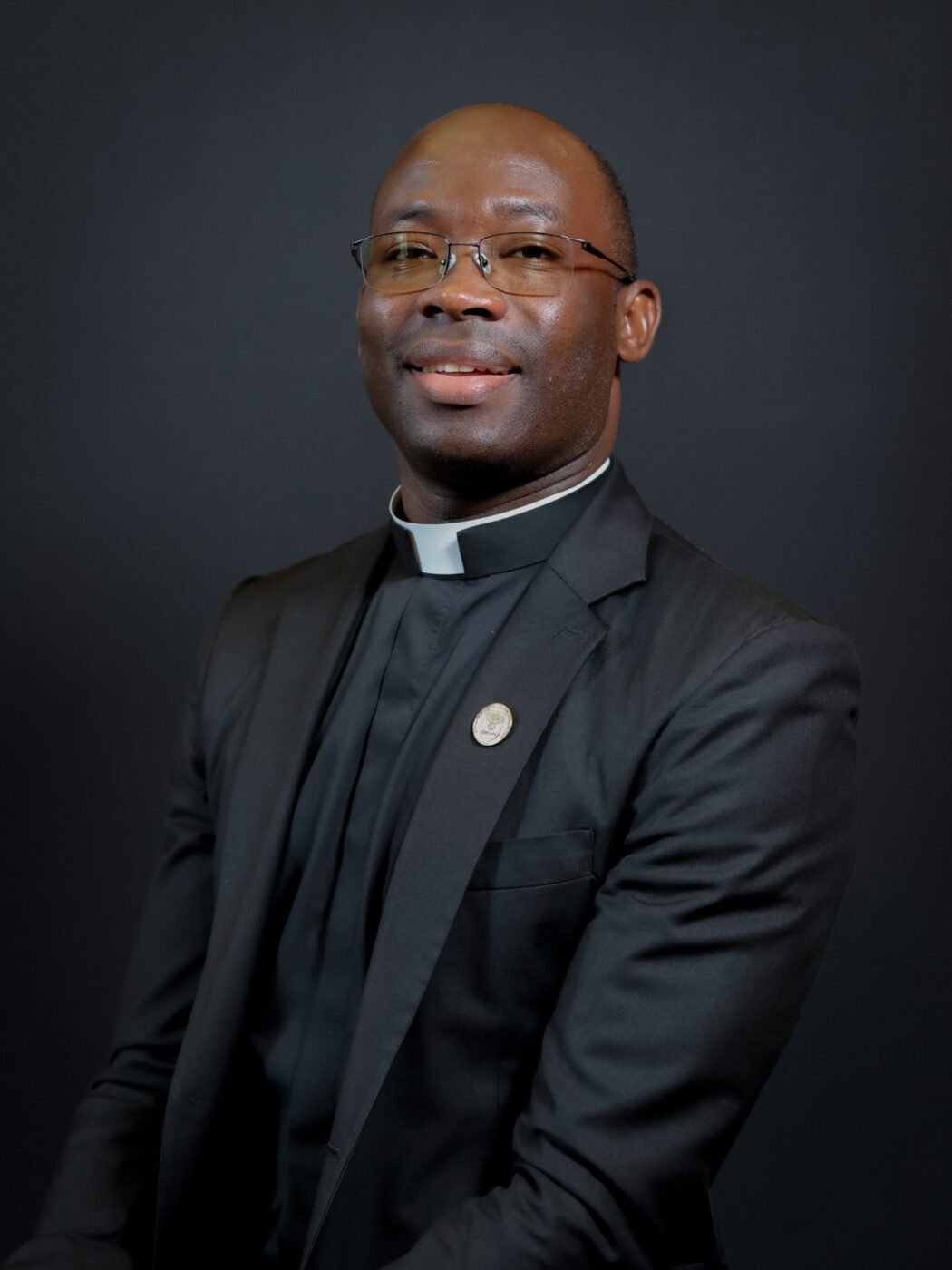
Rev. Stanislaus Achu
St. Joseph Major Seminary, B. Phil., 2015
Saint John’s Seminary, M.Div., 2020; S.T.B., 2020
Boston College School of Theology and Ministry, S.T.L., 2024
Profile See all posts© 2026 All Rights Reserved
Site by 