
Today’s readings place before us one of Scripture’s most powerful images: the vineyard. It is more than a metaphor. It tells the story of God’s covenant with His people, the mystery of Christ, and the story of our own lives.
In the first reading, Isaiah sings of a beloved who carefully plants and tends his vineyard. He chooses fertile ground, clears away the stones, plants the choicest vines, builds a watchtower, and prepares a winepress. Nothing has been neglected. Yet at harvest time, the vineyard produces wild grapes. The Lord asks the haunting question: “What more was there to do for my vineyard that I had not done?”
Isaiah explains that the vineyard is Israel, God’s cherished people. God has given them everything necessary to flourish, yet the fruit he finds is not justice and righteousness but violence and injustice. The tragedy is not that God failed to provide. The tragedy is that His gifts did not produce the fruit for which they were given.
Jesus takes up the same image in today’s Gospel. The landowner sends servants to gather the harvest, but the tenants reject and kill them. Finally, he sends his son. Here the parable becomes unmistakably about Christ. The prophets were servants; Jesus is the Son. He comes to gather the harvest of God’s covenant, yet the tenants reject Him and put Him to death.
But rejection will not have the final word. “The stone that the builders rejected has become the cornerstone.” The Cross, which appears to be defeat, becomes the place where the Son offers Himself completely to the Father for the life of the world.
And this brings us to the Eucharist.
The vineyard has a winepress because its fruit is destined to become wine. At the Last Supper, Jesus takes the cup and declares, “This is my blood of the covenant.” The fruit of the vine becomes the sacramental sign of Christ’s Blood. The Eucharist is the fulfillment of the vineyard: the beloved Son gives Himself, and the Church receives that sacrifice sacramentally.
But there is a question for each of us: What fruit is God finding in the vineyard of my life?
God has given us life, faith, Scripture, the Church, the sacraments, people to love, opportunities to serve, and the grace to begin again. Above all, he has given us His Son. The question is whether these gifts are transforming us.
Today is Respect Life Sunday. All life in the vineyard demands our attention, care and protection. Every human life is a gift entrusted to us by God, and every person bears a dignity that does not depend upon age, ability, health, usefulness, or circumstance. If the fruit God desires is justice and righteousness, then our love must extend especially to those whose lives are vulnerable or easily overlooked.
To bear the fruit of the Gospel means defending life, certainly, but also cultivating a culture in which people are accompanied rather than abandoned: welcoming the child in the womb, standing beside the elderly and the sick, supporting families in difficulty, caring for those who are poor, lonely, disabled, or forgotten. We do not simply speak about the dignity of life; we are called to make that dignity visible through concrete acts of love.
Saint Paul gives us the interior foundation for such a life: “Have no anxiety at all, but in everything, by prayer and petition, with thanksgiving, make your requests known to God.” And he tells us to dwell upon “whatever is true, whatever is honorable, whatever is just, whatever is pure, whatever is lovely, whatever is gracious.”
What fills our hearts eventually becomes visible in our lives. The Eucharist gives us the grace to let Christ shape what fills our hearts. We come to Mass carrying the vineyard of our lives—our joys, wounds, failures, relationships, responsibilities, fears, and hopes. We bring them to the altar and unite them to Christ’s perfect offering.
The Eucharist is not simply something we receive. It is an invitation to become what we receive.
Christ gives Himself to us so that His life may bear fruit through us. We cannot receive the One who poured Himself out for us and remain closed to others. We cannot receive the Bread of Life and remain indifferent to those who hunger. We cannot receive Christ’s forgiveness while refusing to forgive. We cannot receive His sacrifice and refuse the small sacrifices of love that daily life requires.
Jesus tells us, “I am the true vine, and my Father is the vine grower.” We are fruitful only insofar as we remain united to Him. A branch cannot produce fruit by itself. It must remain connected to the vine.
That is the heart of Eucharistic life. Communion with Christ is not merely a private spiritual experience. It draws us into communion with His Body, the Church, and sends us into the world to become instruments of His love.
“The Gospel of God's love for man, the Gospel of the dignity of the person and the Gospel of life are a single and indivisible Gospel.” --Pope Saint John Paul II, Evangelium Vitae
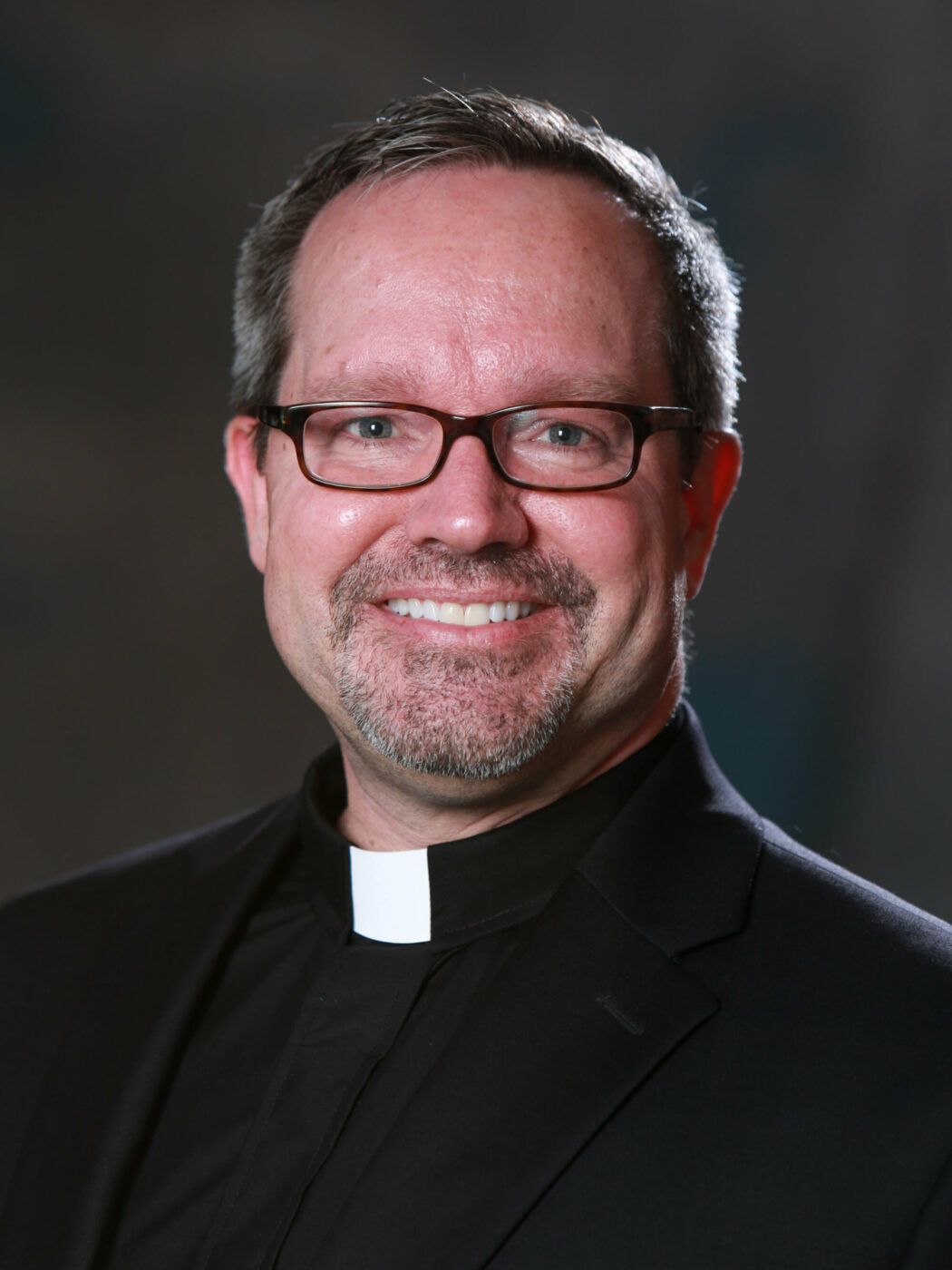
Rev. Michael MacInnis
Saint John Seminary, B.A.
Weston Jesuit School of Theology, M.Div.
Weston Jesuit School of Theology, Th.M.
Profile See all posts© 2026 All Rights Reserved
Site by 